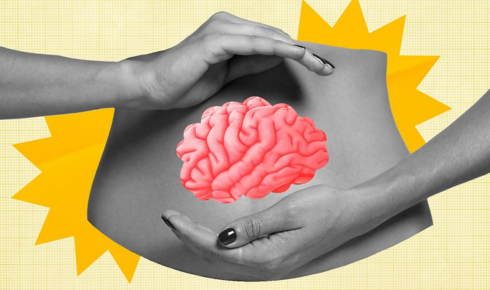
I will never forget the year I thought I was losing my edge. My brain constantly felt like it was wrapped in thick cotton. I was relying on strong coffee just to get through my morning schedule, and by mid-afternoon, my anxiety was humming like a refrigerator in the background. I assumed I was just experiencing normal professional burnout.
It was not until I started paying close attention to the physical signals in my body that the true issue became clear. Every single time my stomach felt heavy and tense, the mental fog and anxiety would immediately follow. My nervous system and my digestion were simply locked in a quiet, exhausting battle.
I share this personal realization because I see that same exhaustion in my clinical practice every single week. Just last month, a patient named Elena sat across from me. She manages a busy team and looks incredibly put together. But she confessed that she felt like she was constantly walking through a fog and watching her life move forward while she stood still.
“My anxiety is always running, and I just cannot focus on anything,” she told me. She had tried meditation apps, talk therapy, and pushing through. Nothing was working..
When I asked her how her digestion was, she looked completely confused. “Well, my stomach is always tied in knots after lunch, but what does that have to do with my brain?”
That answer is absolutely everything. We have always been taught that the mind and the stomach were two totally separate systems. Today, clinical science tells a different story. Your gut and your subconscious mind are in constant communication through the Vagus Nerve. If your digestion is struggling, your mental clarity and emotional stability likely also struggling and
usually the first things that you actually notice.
.
The Highway Inside You: The Vagus Nerve
You have more than one control center in your body.
Your primary brain sits inside your skull, but your digestive system has its own complex network of nerves. This is often called the “second brain,” and it plays a powerful role in how your body processes stress, digestion, and emotional signals.
The connection between these two systems runs largely through the vagus nerve. You can think of it as a two-way communication pathway between the brain and the gut. It helps carry messages about safety, stress, digestion, inflammation, and regulation.
This is why the gut can influence mood, and mood can influence the gut.
A large portion of the body’s serotonin is produced in the gut, which is one reason digestion and emotional wellbeing are so closely linked. Serotonin is often associated with mood, but it also plays an important role in gut movement, appetite, and digestive comfort.
The highway also works in the other direction.
When the brain perceives stress, the body may shift into protection mode. Digestion can slow down, muscles can tighten, and the gut may become more sensitive. Over time, chronic stress can keep this system activated longer than it was designed to be.
That is why simply trying to “think your way” out of anxiety does not always work. When the nervous system is tense, the body needs more than logic. It needs signals of safety.
3 Signs Your Anxiety is Tied to Your Gut
How do you know whether your worry, brain fog, or emotional fatigue may be part of a gut-brain pattern? These signs are worth paying attention to.
- Unpredictable digestion: You notice bloating, cramps, nausea, or a knotted feeling in your stomach after a stressful conversation, a demanding email, or even a normal meal.
- Stress-related cravings: You find yourself reaching for sweets, simple carbs, or comfort foods when you feel tense or overwhelmed. This can become a way to self-soothe when the body is looking for quick relief.
- Heavy mornings: You wake up feeling tired, tense, or unmotivated, even after a full night in bed. For many people, this can happen when the nervous system has not fully settled overnight, making true rest harder to access.
Simple Steps to Rebuild Your Second Brain
Healing the connection between your gut and your mind is one of the most forgiving processes in the body. You do not need to adopt an extreme, miserable diet to see results. You just need to speak the language of safety to your nervous system.
Here are three gentle ways to start repairing this vital connection.
1. Notice your numbing habits
When our gut and brain are out of sync, we instinctively reach for things to numb the discomfort. For some, it is sugar. For others, it is reaching for a cigarette the moment stress hits. These habits severely irritate the gut lining and keep the nervous system on high alert. Utilizing targeted tools like habit-reversal orsmoking cessation techniques allows your stomach lining a quiet window to rest and repair itself without toxic interference.
2. Shift into the “Rest and Digest” state
This is a critical biological step. Your body cannot digest food efficiently or heal if it thinks it is in danger. If you eat lunch while rushing to a meeting or scrolling through stressful news, your body diverts energy away from your stomach.
This is where somatic tools like clinical hypnotherapy become a game changer. By entering a deeply relaxed, focused state, you can manually shift your nervous system out of the “fight or flight” response and into the parasympathetic “rest and digest” state. This gives your digestive system the biological permission it needs to actually absorb nutrition and heal.
3. Clear the subconscious alarm
Dietary changes alone will not fix a gut issue if your brain is constantly telling your stomach there is a threat nearby. We have to address the root emotional associations to it. Through clinical hypnotherapy, individuals can gently reframe the historical stressors causing their internal fire alarm to ring in the first place. When the subconscious mind finally feels safe, the physical tension in the gut naturally melts away.
Reclaiming Your Baseline
Anxiety and brain fog are clear warning signs from a struggling biological system.
When you learn to integrate body awareness with nervous system regulation, you stop fighting a daily battle against your own physiology. Healing does not have to be a constant struggle of willpower. By creating a safe internal environment, you can heal the vital connection between your mind and your gut, clearing the fog and reclaiming the natural, grounded energy you deserve.
Brian Festa, CHT, is the Clinical Director at HeartWise Hypnotherapy, based in San Diego, California. He specializes in integrating clinical hypnosis and somatic wellness to help professionals overcome chronic stress, anxiety, and deeply rooted behavioral loops.